
What “snow-sure” can reasonably mean
For a booked holiday, useful snow reliability means covered, open terrain at the elevation your group will actually use. A glacier piste high above a village does little for a first lesson on a closed nursery slope. The shortlist below uses published operating windows and altitude ranges. Historical snowfall comparisons would also need consistent measuring points and several seasons of observations.
For early winter, compare Val Thorens and Gurgl
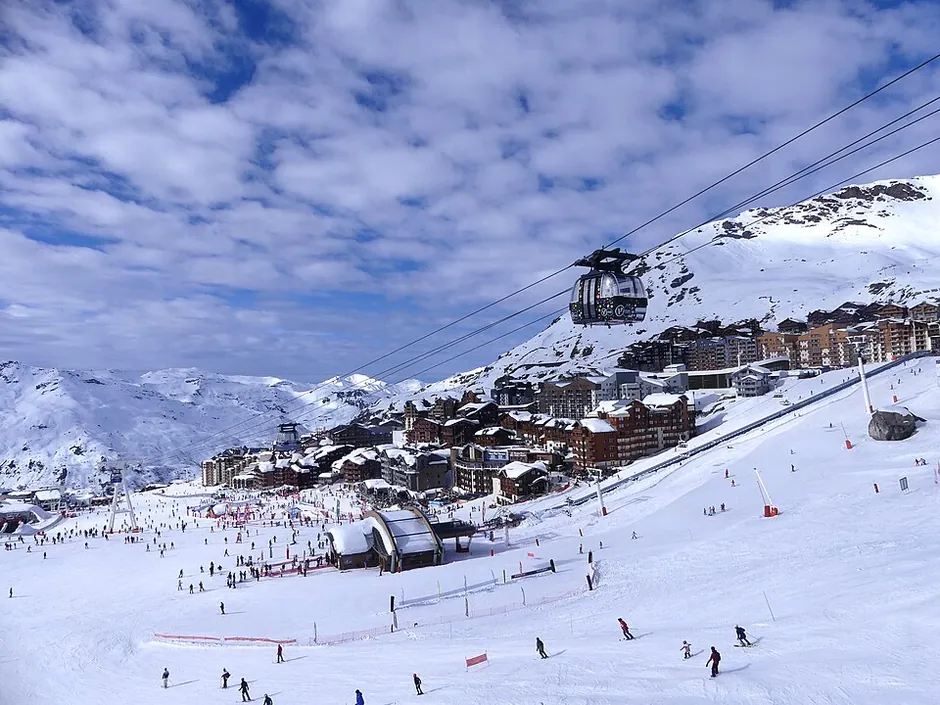
Val Thorens places its village at 2,300 metres. Gurgl lists skiing from 1,800 to 3,030 metres. Compare the start and finish elevation of the particular piste you need, then read the opening schedule. At Val Thorens the local area and the much larger linked domain have different opening windows. Check which pass and links will be useful on your dates.
For the end of winter, check the glacier sector
Zermatt combines glacier terrain with other sectors around Sunnegga and Gornergrat. Hintertux publishes the glacier’s operating hours and weather-dependent updates. On an April trip, find out which lifts are scheduled for skiing rather than sightseeing. Add an alternative sector if an exposed upper lift is held.
Make the final choice the day before
Use the forecast to locate the rain–snow transition and the resort report to confirm recent snowfall, base cover and open runs. Look for the reporting elevation and update time. A measured base at the summit, new snow over 24 hours and projected snowfall over seven days answer three different questions.